What do the "legs" on a wine glass mean?
What those dripping streaks really tell you
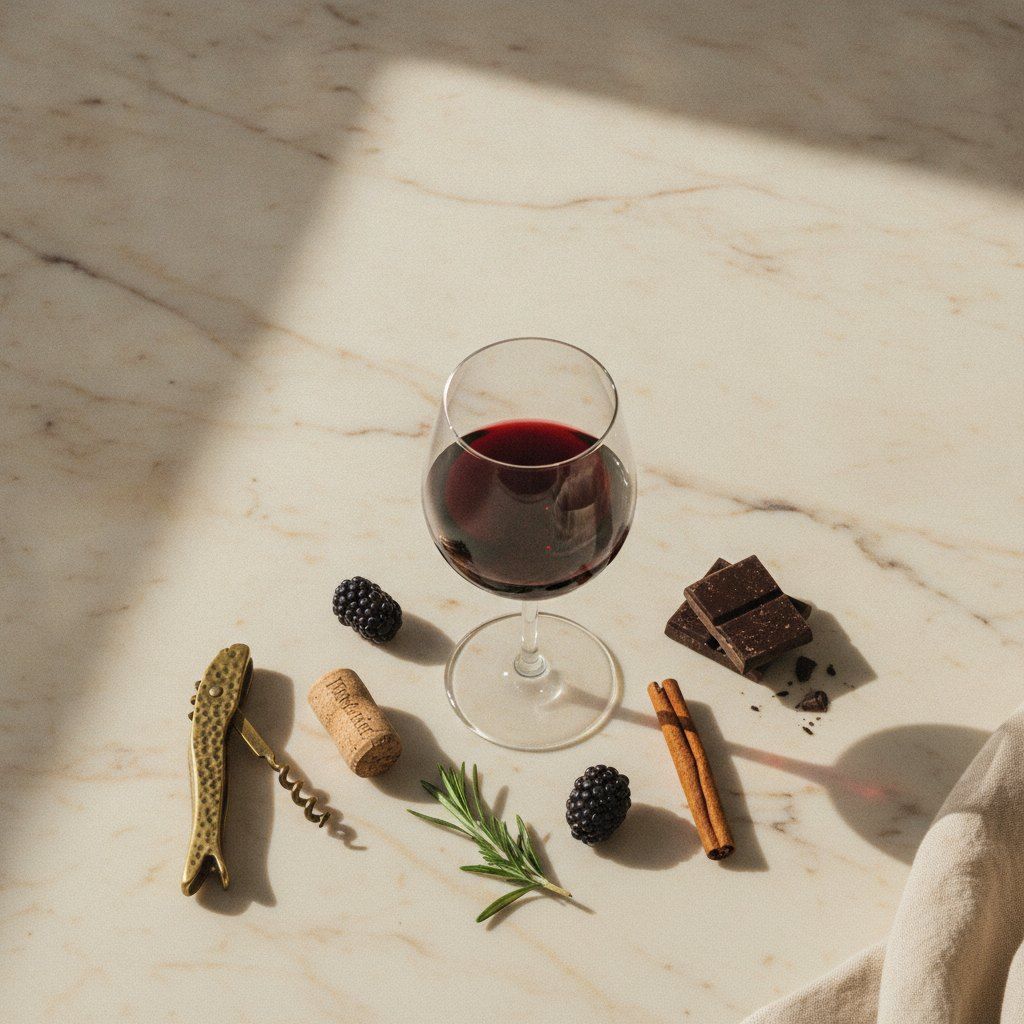
The "legs" (or "tears") are the streaks of liquid that run down the inside of the glass after you swirl. They are caused by alcohol evaporating faster than water and are mainly a sign of alcohol and sugar content — not of wine quality.
Swirl a glass of wine, and you will often see droplets form near the rim and slide back down in slow, arching streaks. These are the wine's "legs" or "tears", and they are one of the most misunderstood signs in wine tasting. A persistent myth holds that thick, slow legs indicate a high-quality wine — they do not.
What legs actually reveal is the wine's alcohol content, and to a lesser extent its sugar. They are a physical effect, not a mark of pedigree: a cheap, high-alcohol wine will show prominent legs, and a great, lighter wine may show barely any.
The phenomenon has a proper scientific name — the Gibbs–Marangoni effect — and understanding it turns a party trick into a genuine, if minor, tasting clue about body and ripeness.
- Legs (or tears) are the streaks that run down the glass after swirling.
- They are caused by alcohol evaporating faster than water (the Marangoni effect).
- Prominent, slow legs indicate higher alcohol and sometimes sugar — not quality.
- They loosely correlate with body but say nothing about balance or flavour.
- Warmer rooms and clean, dry glasses make legs more pronounced.
The mechanism comes down to alcohol evaporating faster than water. When you swirl, a thin film of wine coats the inside of the glass. Alcohol at the surface of that film evaporates quickly, and because alcohol has lower surface tension than water, the remaining, more watery liquid is pulled together into droplets. Gravity then drags those droplets down the glass as the visible legs. The higher the alcohol, the more pronounced and slower-moving the tears; residual sugar and glycerol add viscosity that makes them thicker and slower still.
So legs are a rough gauge of alcohol and sweetness, which correlate loosely with body: a fortified Port or a ripe 15% Zinfandel shows dramatic, syrupy legs, while a light 11% Riesling or Vinho Verde shows thin, fast ones. That can be a useful cross-check in a blind tasting — heavy legs suggest a warm-climate or fortified wine — but it says nothing about balance, complexity, or how good the wine tastes.
Ambient conditions matter too. Legs are more pronounced in a clean, dry glass and in warmer rooms, where evaporation is faster, and less visible in a humid environment. Because so many variables are at play, treat legs as a small piece of the picture. The real information in a tasting comes from aroma, flavour, acidity, tannin, and finish — not from how impressively the wine drips.
Frequently asked questions
Do wine legs indicate quality?
No. This is a persistent myth. Legs reflect a wine's alcohol content and, to a lesser degree, its sugar and glycerol — not its quality. A cheap high-alcohol wine can show dramatic legs, while an excellent lighter wine shows almost none.
What causes wine legs?
They are produced by the Gibbs–Marangoni effect: alcohol evaporates faster than water and has lower surface tension, so the film of wine on the glass beads into droplets that run down under gravity. Higher alcohol and sugar make the legs thicker and slower.
What do thick, slow legs tell me about a wine?
They suggest higher alcohol and possibly residual sugar, which usually means a fuller-bodied or warm-climate wine, or a fortified style like Port. It is a useful clue to body in blind tasting, but not a measure of how good the wine is.
Ask your own wine questions — Sommvi's AI sommelier has the answers.
Download on the App Store