What is a wine blend?
Combining grapes to build balance and complexity
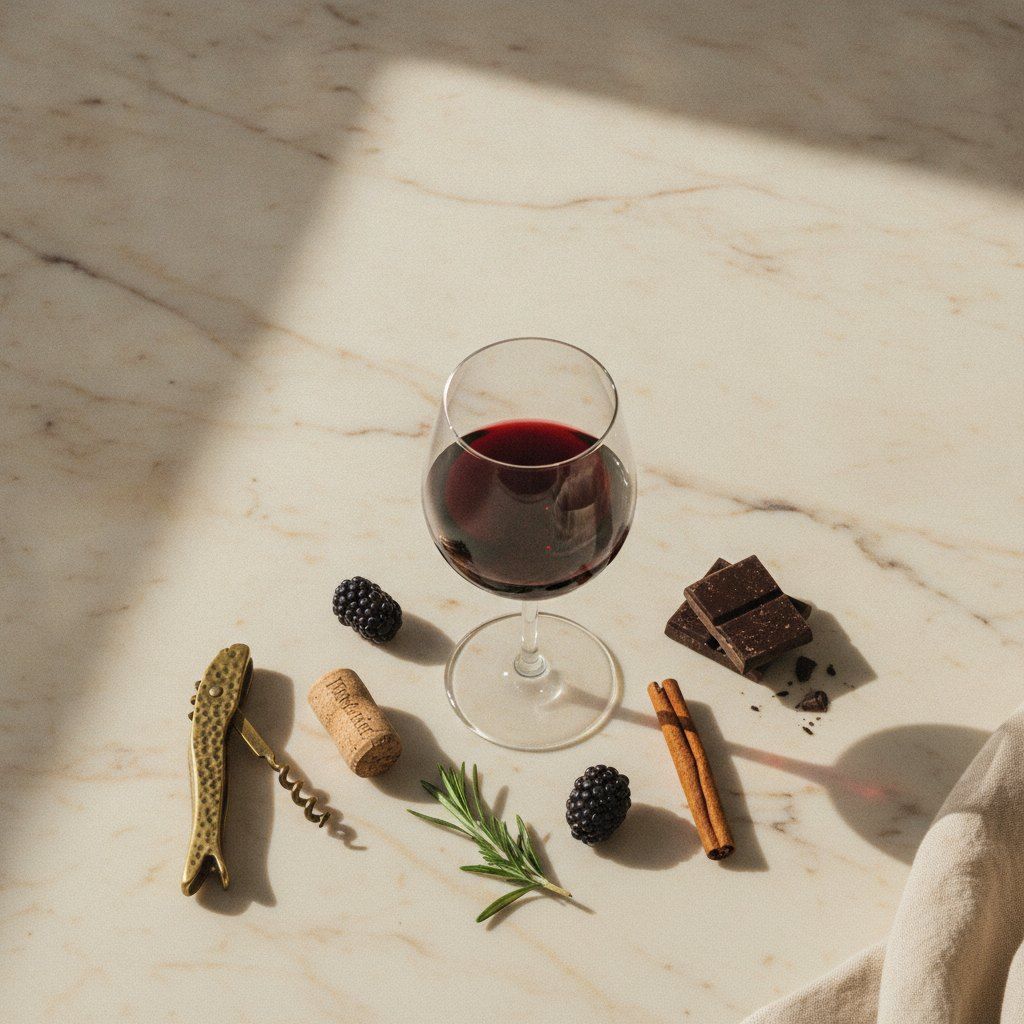
A wine blend combines two or more grape varieties (or lots from different vineyards or barrels) into one finished wine. Blending lets the winemaker balance strengths and weaknesses — structure, fruit, acidity, and aroma — to create something better than any single component alone.
A blend is a wine made from more than one grape variety, or from multiple separate lots combined before bottling. Far from being a lesser product, blending is one of the oldest and most respected winemaking skills — many of the world's greatest wines, from Bordeaux to Châteauneuf-du-Pape to Champagne, are blends by design.
The logic is complementary strengths. One grape may bring colour and tannin, another bright fruit, a third aromatic lift or softening flesh. Blended together in the right proportions, they produce a wine with more balance, depth, and consistency than a single variety could deliver on its own.
The opposite of a blend is a "varietal" wine, made from (or dominated by) a single grape. Both approaches are legitimate; blending is simply a different toolkit, prized in regions where no single grape reliably ripens to perfection every year.
- A blend combines multiple grape varieties or lots into one finished wine.
- Blending balances complementary strengths — structure, fruit, acidity, aroma.
- Many iconic wines are blends: Bordeaux, Châteauneuf-du-Pape, Champagne.
- It also hedges against vintage variation by shifting the grape proportions.
- A "varietal" wine can still legally be a blend, as minimums are often 75–85%.
Bordeaux is the archetype. Cabernet Sauvignon supplies tannin, structure, and cassis; Merlot adds plush texture and plummy fruit that fills the mid-palate; smaller amounts of Cabernet Franc, Petit Verdot, and Malbec contribute perfume, colour, and spice. In a cool year the winemaker leans on the earlier-ripening Merlot; in a warm year, on Cabernet. Blending is thus also a hedge against vintage variation. The southern Rhône's Grenache-Syrah-Mourvèdre ("GSM") blend and Champagne's Chardonnay-Pinot Noir-Meunier trio follow the same complementary logic.
Blending can happen at several stages. Field blends are grown and picked together from mixed old vineyards. More commonly, varieties are fermented separately and combined afterwards, giving the winemaker precise control over the final proportions. Even single-variety wines are often "blends" in a looser sense — assembled from different barrels, vineyard plots, or vine ages to achieve a consistent house style.
Labelling rules shape what you see. In most regions a wine can name a single grape only if it contains a legal minimum of it (commonly 75–85%), so a bottle labelled "Cabernet Sauvignon" may still be a blend under the hood. Some blends are named after their region (Bordeaux, Rioja), some after a proprietary brand, and some list the varieties and percentages on the back label. None of this signals quality by itself — a great blend and a great varietal are both about balance in the glass.
Frequently asked questions
Are blended wines lower quality than single-variety wines?
Not at all. Some of the world's most prestigious and expensive wines — Bordeaux first growths, Châteauneuf-du-Pape, vintage Champagne — are blends. Blending is a deliberate skill used to achieve balance and complexity, not a way to hide flaws.
What is a GSM blend?
GSM stands for Grenache, Syrah, and Mourvèdre, the classic red blend of the southern Rhône (as in Châteauneuf-du-Pape) and widely made in Australia. Grenache brings ripe fruit and warmth, Syrah adds structure and spice, and Mourvèdre contributes tannin and savoury depth.
If a label says one grape, is it 100% that grape?
Usually not necessarily. Most regions allow a wine to be labelled by a single variety if it contains a legal minimum — often 75% to 85% — so the remainder may be other grapes used to fine-tune the blend.
Ask your own wine questions — Sommvi's AI sommelier has the answers.
Download on the App Store