What is an appellation?
The legally defined place a wine comes from
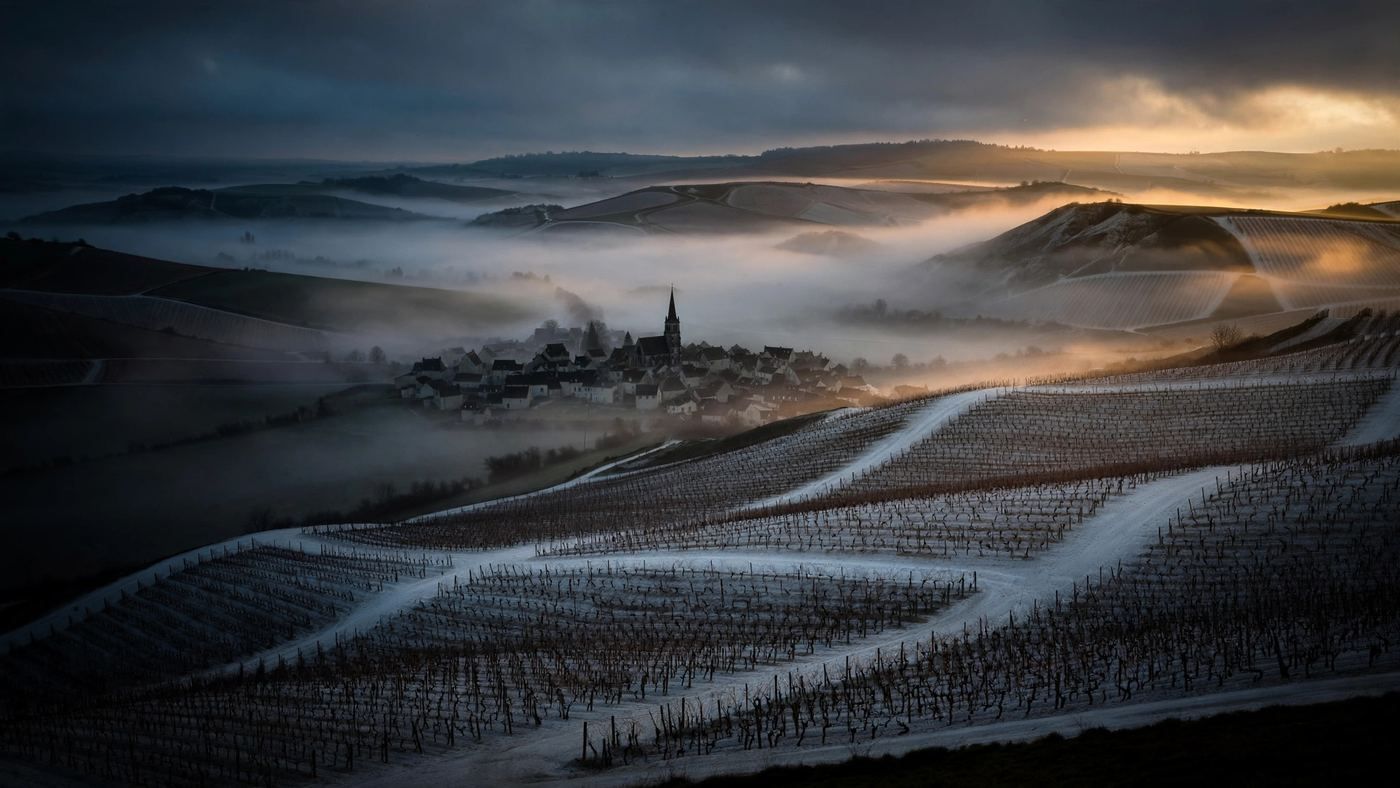
An appellation is a legally defined geographic area where a wine's grapes are grown, often with rules governing grape varieties, yields, and winemaking. It guarantees origin and, in many regions, a certain style and quality standard.
An appellation answers the question "where is this wine from?" — but with legal force. Rather than a vague region, it is a demarcated zone whose boundaries and, frequently, whose winemaking rules are set down in law. Chablis, Barolo, Rioja, and Napa Valley are all appellations.
The concept is strongest in the Old World, where the idea of terroir — the notion that a place imparts a distinctive character to its wine — underpins the whole system. European appellations often dictate far more than geography: which grape varieties are permitted, maximum yields, minimum ripeness, ageing requirements, and sometimes even vine-training methods. Because of this, the appellation on an Old World label often tells you the grape without it being named: Chablis is Chardonnay, Sancerre is Sauvignon Blanc, Barolo is Nebbiolo.
Each country has its own framework. France has the AOC/AOP system; Italy has DOC and DOCG; Spain has DO and DOCa; Portugal has DOC. The United States uses AVAs (American Viticultural Areas), which define geography but impose far fewer winemaking rules.
- An appellation is a legally defined winegrowing area, often with production rules.
- Old World appellations frequently dictate grapes, yields, and ageing.
- The appellation often implies the grape (Chablis = Chardonnay).
- Systems include France's AOP, Italy's DOC/DOCG, and the US AVA.
- Narrower appellations usually signal higher prestige and price.
The purpose of an appellation system is twofold: to protect producers by guaranteeing that a name like Champagne can only come from that specific place, and to give drinkers a reliable signal of origin and style. When you buy a bottle labelled Chianti Classico, the appellation rules assure you it comes from a defined zone in Tuscany, is based on the Sangiovese grape, and has met certain minimum standards.
There is usually a hierarchy of specificity, and narrower generally means more prestigious. In Burgundy, for example, a wine can be labelled at the regional level (Bourgogne), the village level (Gevrey-Chambertin), the Premier Cru level (a named vineyard within a village), or the Grand Cru level (the finest individual vineyards). The tighter the appellation, the more precisely it pins down the wine's origin — and typically the higher the price and quality expectation.
It is worth remembering the trade-off. Appellation rules preserve tradition and typicity, but they can also constrain innovation — a winemaker who wants to plant a non-permitted grape or exceed yield limits must sell the wine under a lower, more generic designation (such as the French "Vin de France"). New World AVAs take the looser approach, defining place but leaving grape and style choices to the producer, which allows more experimentation. Neither approach is superior; they simply reflect different philosophies about what a wine's origin should guarantee.
Frequently asked questions
What is the difference between an appellation and a region?
A region is a general geographic area, while an appellation is a legally defined and regulated one. An appellation has official boundaries and often rules about which grapes and methods are allowed, giving it legal protection that a loosely used region name does not have.
Why does the grape variety not appear on some appellation labels?
In much of the Old World, the appellation implies the grape — Sancerre means Sauvignon Blanc, Barolo means Nebbiolo — because the rules permit only certain varieties. The place is considered more meaningful than the grape, so the variety is often omitted.
Is an AVA the same as an appellation?
An American Viticultural Area (AVA) is the US form of appellation, but it only defines geography — at least 85% of the grapes must come from the named area. Unlike European appellations, an AVA does not dictate grape varieties, yields, or winemaking methods.
Ask your own wine questions — Sommvi's AI sommelier has the answers.
Download on the App Store