What does "earthy" mean in wine?
Forest floor, mushroom, and the savoury side of wine
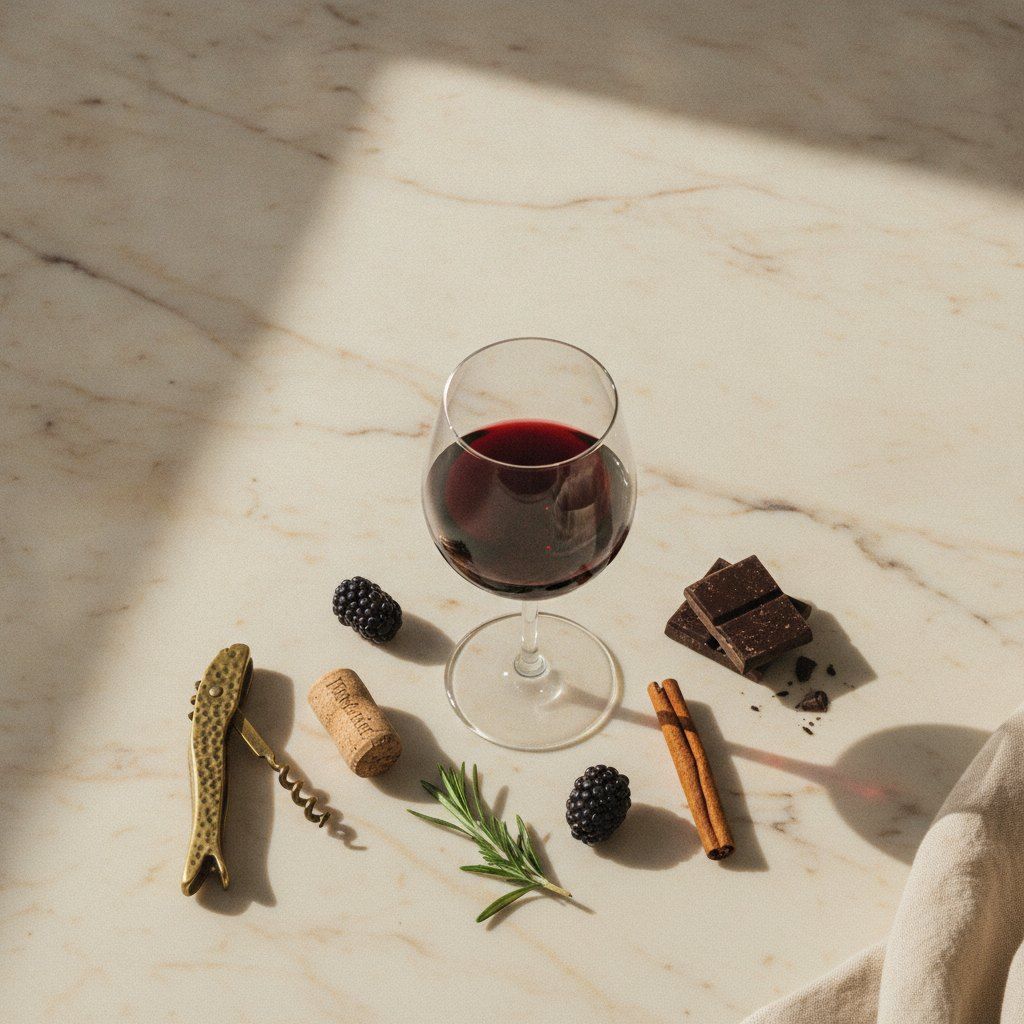
Earthy is a tasting term for wines that smell and taste of the soil and the forest rather than of fruit — damp earth, forest floor, mushroom, autumn leaves, beetroot, or turned soil. It is a hallmark of Old World reds such as Pinot Noir, Nebbiolo, and aged Bordeaux, and it usually signals a savoury, terroir-driven style.
Earthy wines lead with the ground, not the orchard. Instead of fresh berries or stone fruit, the first impression is mushroom, wet leaves, potting soil, truffle, or the smell of a forest after rain. For drinkers raised on ripe, fruit-forward wines it can be an acquired taste — and for many, it becomes the quality they value most.
Earthiness comes from several sources. Some is varietal: Pinot Noir, Nebbiolo, Sangiovese, and Cabernet Franc naturally develop savoury, soil-like notes, especially in cool climates where fruit ripeness stays restrained. Some develops with age, as the bright primary fruit of a young wine fades and secondary, organic flavours — leather, tobacco, forest floor — move to the front. And some comes from the vineyard and cellar environment itself.
The term sits close to terroir: earthy is how many tasters describe a wine that tastes of where it was grown rather than of how ripe the grapes were. It is most associated with the Old World — Burgundy, Piedmont, Bordeaux, the Loire — where cooler conditions and traditional winemaking keep fruit in the background.
- "Earthy" = damp soil, forest floor, mushroom, leaves, and truffle notes.
- Most common in Old World reds: Pinot Noir, Nebbiolo, Sangiovese, aged Bordeaux.
- Develops with bottle age as primary fruit fades and savoury notes emerge.
- Distinct from faults: brett barnyard and cork-taint mustiness are not terroir.
- Earthy wines pair exceptionally with mushrooms, game, and aged cheese.
Not all earthiness is a virtue. A little adds complexity and a sense of place; a lot can mean a fault. Brettanomyces, a wild yeast, produces barnyard and manure-like notes that some drinkers enjoy in small doses and others reject outright. Cork taint smells of wet cardboard and musty cellars and flattens the fruit — that is not terroir, it is a spoiled bottle.
The useful distinction is between earthiness that frames the fruit and earthiness that replaces it. In a great mature Burgundy, the forest-floor note sits underneath still-lively fruit and makes the wine feel complete. In a tired or faulty wine, earth is all that is left.
Earthy wines are outstanding at the table. Their savoury character latches onto mushroom dishes, roast game, lentils, and aged cheeses in a way fruit-driven wines cannot, because the flavours in the glass and on the plate speak the same language. If you love earthy reds, your palate profile likely favours restraint and savour over ripeness and sweetness.
Frequently asked questions
Is earthy a good thing in wine?
Usually, yes — in balance. Earthy complexity is prized in many of the world’s most respected reds. It only becomes a negative when it overwhelms the fruit or comes from a fault such as cork taint or heavy brettanomyces.
What is the difference between earthy and mineral?
Earthy notes are organic — soil, leaves, mushroom, forest floor. Minerality is inorganic in impression — wet stone, chalk, flint, salinity. A wine can be both: a Chablis can taste chalky (mineral) while an aged Pinot Noir tastes of forest floor (earthy).
Which wines taste earthy?
Red Burgundy (Pinot Noir), Barolo and Barbaresco (Nebbiolo), Chianti Classico (Sangiovese), Loire Cabernet Franc, Rioja Gran Reserva, and mature Bordeaux are the classic earthy styles.
Ask your own wine questions — Sommvi's AI sommelier has the answers.
Download on the App Store